
So far we have presented the orthodox version of Egyptian history and archaeology. The great pyramids of Giza and the Great Sphinx were constructed about 2500 BCE. The pyramids were constructed as tombs for the pharaohs. There is no mystery.
Unfortunately for these theories, there is very little evidence for them! For a start, not one mummy has ever been found inside the pyramids constructed in the Old Kingdom period, when the most spectacular Egyptian building took place. Also, there is a problem with the age of the sphinx.
The Great Sphinx: Ancient Mysteries and Rainy Surprises
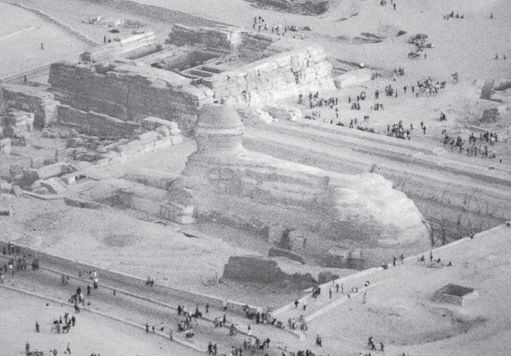
Standing proudly on the Giza Plateau, the Great Sphinx is an iconic symbol of ancient Egypt. With the body of a lion and the head of a pharaoh, this majestic statue has been watching over the desert for thousands of years. Traditionally, most Egyptologists date the Sphinx to around 2500 BCE, attributing its construction to Pharaoh Khafre. But, as with all good mysteries, there’s a twist.
The Rain Weathering Debate
In the 1950s a mysterious character named R. A. Schwaller de Lubicz moved to Egypt. De Lubicz was an alchemist, an occultist and a healer. He spent twelve years in Egypt meticulously measuring monuments and temples. We shall return to Schwaller de Lubicz in later blogs, but during his time in Egypt he made the observation that the Sphinx seemed to have suffered water erosion, rather than just erosion from the arid desert climate that Egypt was thought to have experienced at the time Egyptologists gave for the construction of the Sphinx.
De Lubicz claimed that actually the Sphinx was created during a time when Egypt experienced a much rainier climate - and dated it to about 10,000 BCE. He also put forward the idea that the Sphinx was created by a colony of people who had migrated from Atlantis.
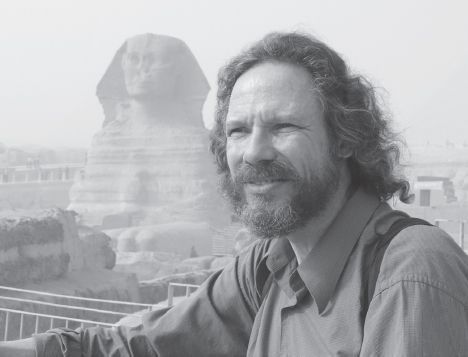
Enter Dr. Robert Schoch, a geologist with a keen eye for details. In the early '90s, Schoch proposed a revolutionary theory: the weathering patterns on the Sphinx's body suggested significant exposure to rainfall. Now, if you know anything about Egypt's climate, you’ll know that heavy rain isn’t exactly a frequent visitor. This claim, naturally, caused quite a stir in the academic world.
Climate Clues from Ancient Egypt
Modern Egypt is predominantly arid, with the Sahara Desert being one of the driest places on Earth. So, how could the Sphinx show signs of rain erosion? Schoch’s hypothesis is that these patterns indicate a time when the climate was much wetter, possibly dating the Sphinx to a period between 7000 BCE and 5000 BCE. This would push the statue's origins back by thousands of years, suggesting an advanced pre-Pharaonic civilization.
Sand vs. Rain: The Scholarly Showdown
Unsurprisingly, Schoch’s theory didn’t go unchallenged. Traditional Egyptologists, including Mark Lehner, argue that the weathering could be the result of other factors like wind, sand erosion, and the inherent qualities of the limestone. Lehner suggests that the Sphinx’s erosion patterns can be explained by the abrasive action of wind-blown sand, combined with the statue’s long exposure to the elements. It’s a classic academic standoff: rain versus sand, with each side presenting compelling arguments.

A Sphinx’s Perspective
Imagine the Sphinx itself weighing in on this debate. With millennia of wisdom, it might chuckle and say, “Seriously, folks? After all this time, you’re still debating my age? Just appreciate the view!” Indeed, the Sphinx has silently witnessed countless generations come and go, all the while keeping its secrets close.
The Geological Evidence
Schoch’s evidence for rain weathering comes from his detailed study of the
Sphinx’s enclosure. He observed that the vertical and undulating erosion patterns on the limestone blocks are more consistent with water erosion than with wind and sand. This kind of weathering typically occurs in a climate with significant rainfall, supporting his theory of a much older Sphinx.
In 1992 Schoch and a colleague performed a comprehensive seismic survey of the area around the Sphinx. Their survey showed a number of underground chambers, including one under the left paw of the Sphinx. You may remember from last week that Edgar Cayce predicted exactly this.
The Broader Implications
If Schoch’s hypothesis is correct, it would mean rethinking our understanding of early human civilizations. An older Sphinx suggests the existence of a sophisticated culture predating the known Egyptian civilization by several millennia. This idea challenges the conventional timeline of human development and opens up fascinating new avenues for exploration and study. Later investigations caused Schoch to revise his opinion on the age of the Sphinx - backwards. His latest research convinced him that the Sphinx was built around 10,000 BCE - in line with the clairvoyants…
The Jury’s Still Out
So, what’s the verdict? The age of the Great Sphinx and the cause of its weathering remain hotly debated topics. While Schoch’s theory of rain erosion presents intriguing possibilities, traditional Egyptologists hold firm to their explanations of wind and sand erosion. It should be noted that Egyptologists are trained in archaeology, history, and language - but not in geology.
The truth is still to be decided. It is a strange alliance, clairvoyants, occultists and geologists on one side, traditional Egyptologists fiercely defending an entrenched position on the other.
Wrapping Up the Mystery
The Great Sphinx of Giza continues to captivate and mystify us. Whether it’s 4,500 years old or twice that age, it stands as a testament to human ingenuity and the enduring allure of ancient mysteries. As we continue to study and explore, we may one day uncover the definitive answer. Until then, the Sphinx keeps its secrets, and we keep wondering.
So next time you gaze upon an image of the Sphinx, remember: it’s not just a monument of stone but a symbol of our relentless quest for knowledge and understanding. And who knows, maybe one day we’ll finally solve the riddle of its age – rain or shine.
…next week, another look at the pyramids…