
The Battle Begins: Orthodoxy vs Alternatives
The Riddles of the Sphinx
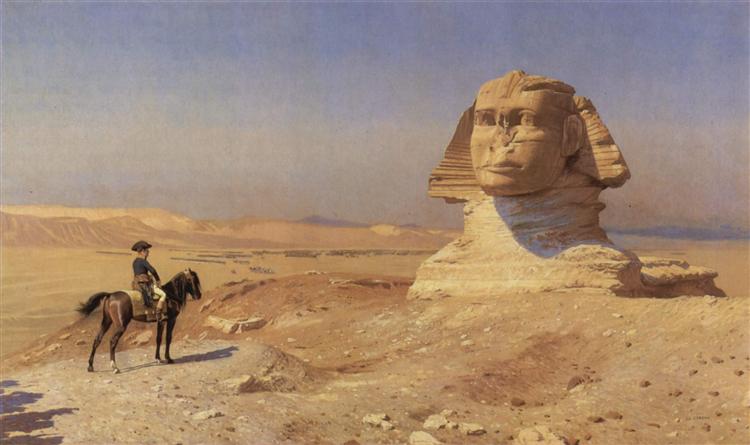
This painting by the French artist Jean-Leon Jerome is called, Napoleon Before the Sphinx. It symbolises the confrontation between the power and the intellect of the West, symbolised by Napoleon, and the endurance and the questions of ancient Egypt.
Since Napoleon, the Egyptologists have pretty well wrapped up the history of this four thousand year old civilisation. In their account between about 5550—3100 BCE, a wave of nomads from northern Africa settled on the banks of the Nile river. The first pharaoh, whom we know as Farmer, unified the northern and southern regions and created the first dynasty in a series between 3100—2686 BCE. In the Old Kingdom period (2686—2134) the first tiered pyramid was constructed, inaugurating an astounding period of construction which culminated in the Great Pyramids of Giza. The final pyramid of the three was built about 2503 BCE. In this version of history, the Great Sphinx was created during the reign of King Khafre, c. 2575—2465 BCE.
Egypt’s history continues. The Middle Kingdom begins around 2030 BCE and continued until a people known as the Hyksos invaded and conquered the Pharaoh of the day. The New Kingdom commenced with pharaoh Ahmos I who threw out the Hyksos in 1539 BCE. The Egyptian civilisation continued throughout the centuries, but in the end, even it became weary. Egypt was 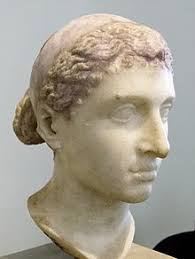 conquered by a series of other empires, concluding with the Persians. Then in 321 BCE Alexander the Great ended Persian rule and was crowned Pharaoh. The Greeks intermarried with the native Egyptians creating the Ptolemaic Dynasty. The last queen of Egypt was the famous Cleopatra, trying to sustain some independence for her country from the overpowering might of Rome.
This is the conventional, orthodox understanding of Egypt and its history. Even this account show how remarkable its longevity was. The Egyptian civilisation and dominance lasted more than 3000 years. As a comparison, the Roman civilisation lasted about 1000 years, the British Empire 400 years, and the American Empire which dominated most of the last century may not even last 100 years.
Remarkable as it is, this story may fall well below reality.
In the Timaeus, Plato tells the story of a great Greek, Solon, who visited Egypt, and was boasting of his lineage and genealogy when he chided gently by an old priest who told him that his civilisation (the Egyptian) was 9000 years old, and was preceded by an even more ancient one, Atlantis.
Atlantis… Did it exist, and if so, why didn’t we begin our journey there? We shall certainly come to Atlantis at the appropriate time, but for the moment, we should consult another contribution to the history of ancient Egypt. In the twentieth century, Edgar Cayce, one of the most famous and well-documented clairvoyants in history told many people in readings that they had incarnations in an ancient Egypt that existed about 10,500 BCE. A comprehensive alternative history of Egypt arises from over 1,200 Cayce readings. According to this history, when Atlantis was destroyed in a huge cataclysm, groups of escapees fled to different parts of the world. One of these groups ended up in the Nile region and began to educate and civilise the native peoples of the area. In Cayce’s version of history, the pyramids were designed, even if not actually built, but the Sphinx was built by the Atlantean settlers well before the reign of the later pharaoh about 2500 BCE.
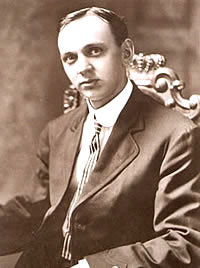
Cayce described a very different Egypt. One that was not dry and arid, but had abundant rainfall and lush river valleys:
The Nile entered into the Atlantic ocean. What is now the Sahara was an inhabited land and very fertile.
Edgar Cayce reading 364-13
Cayce also described chambers under the Sphinx, especially one under the left paw which he called the “Hall of Records”.
We shall continue our account of the battle between orthodoxy and alternative in the next post. But I would like to leave you with pictures of two of the most important Egyptologists in the last century.
Zahi Hawass is…
One of the most important Egyptologists of the present. He has been  appointed to a number of important positions in the Egyptian Council of Antiquities and has performed wonders in bringing back treasures of ancient Egypt dispersed throughout the world, to the country which produced them.
Mark Lehner is…
An American archaeologist and Egyptologist with a Doctorate in Egyptology  from Yale University (1990). He is famous for his work on the Giza plateau, focusing on the Sphinx and the discovery of an enormous area of workers communities.
And on that note … one other curious piece of trivia. Mark Lehner, one of the most important Egyptologists in the world, was introduced to Egypt by the Edgar Cayce readings…
Next time: The tapestry begins to unravel…
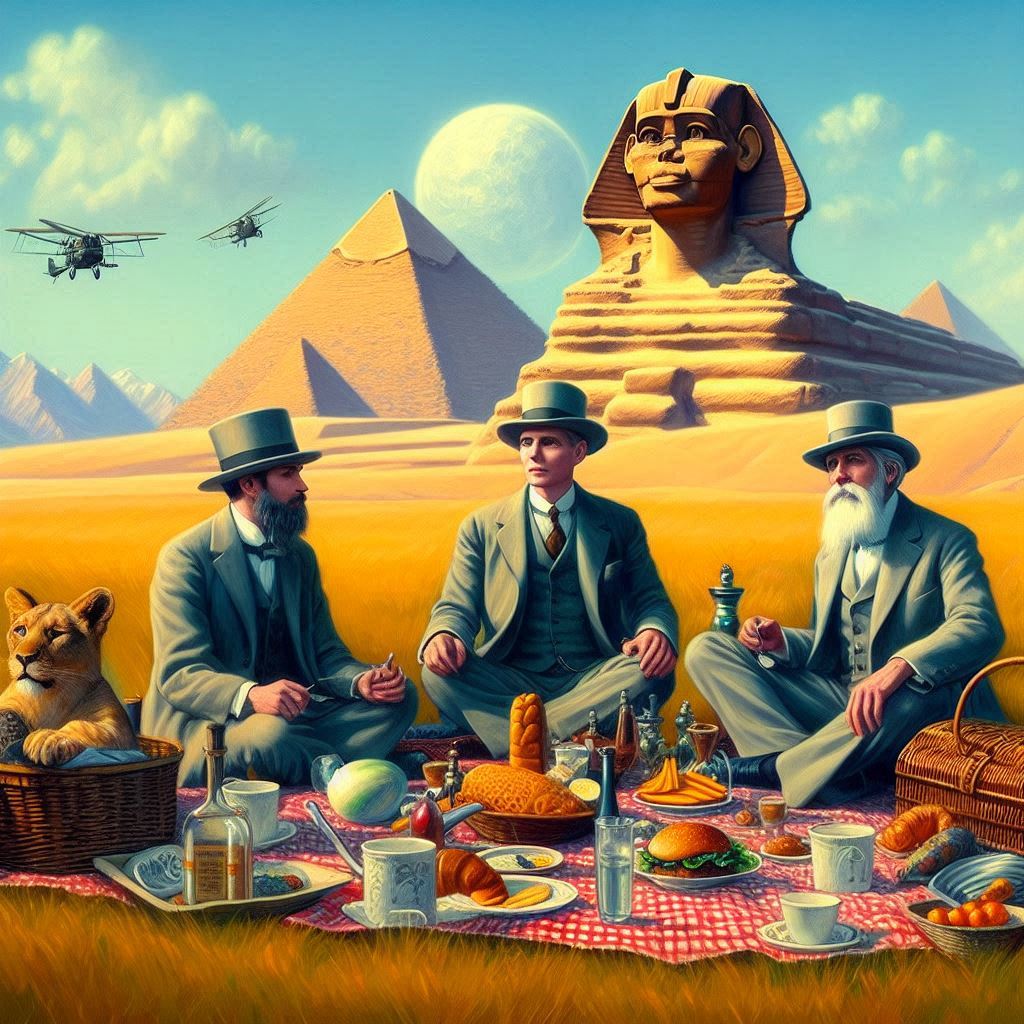
I love Cayce’s version. It makes so much sense xx
This is better than an Agatha Christie mystery? I eagerly await the revealing of the tapestry.
For me this pairing is deeply thought provoking. My attention is drawn in particular to how small the ‘human figure on horse’ is in comparison to the that of the sphinx. Thought provoking in many ways…?