
The Adventures of Schwaller de Lubicz
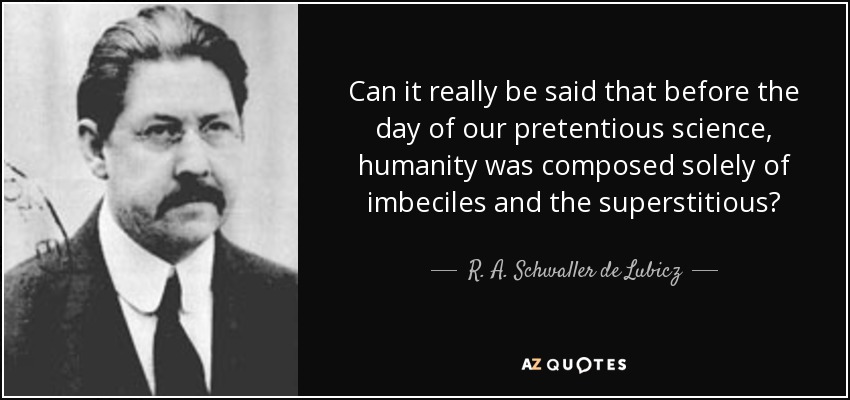
We have been following the early career of Rene Schwaller de Lubicz from its beginnings in Europe to a sudden revelation that convinced him to move to Egypt and spend the next fifteen years living in cramped quarters in a dingy hotel. What was he doing in these fifteen years? Actually, Schwaller de Lubicz was performing one activity, over and over again: He measured.
Schwaller spent most of his time measuring the Temple of Luxor.
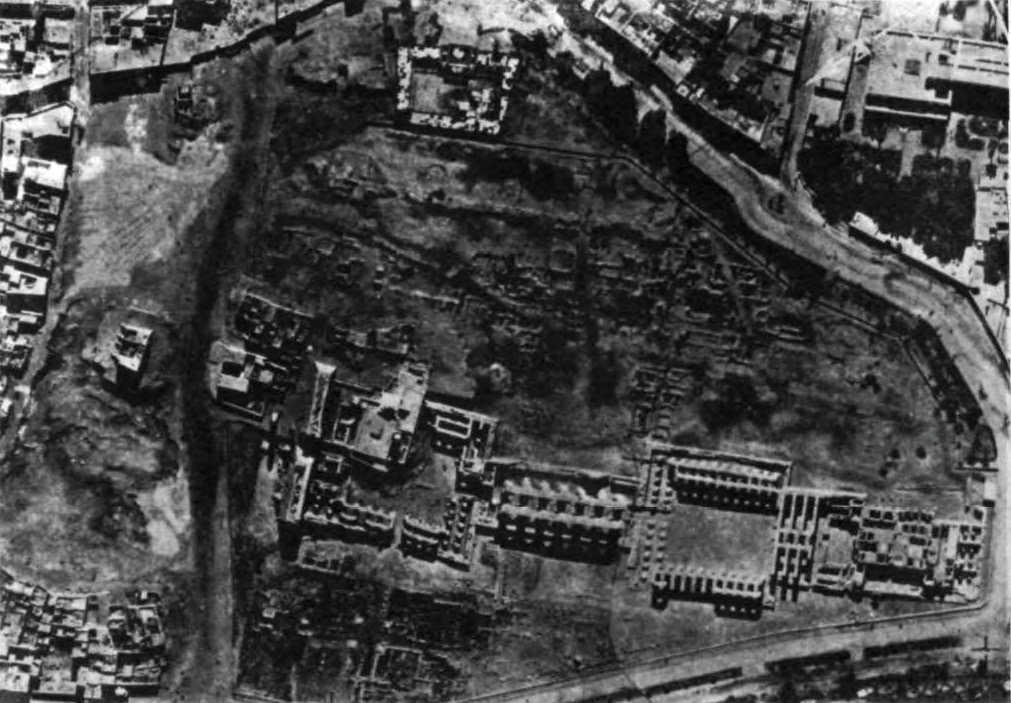
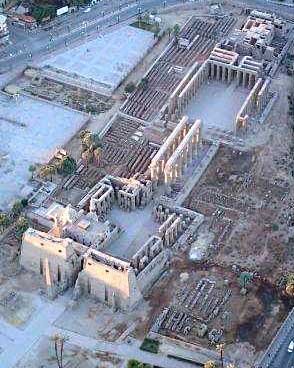
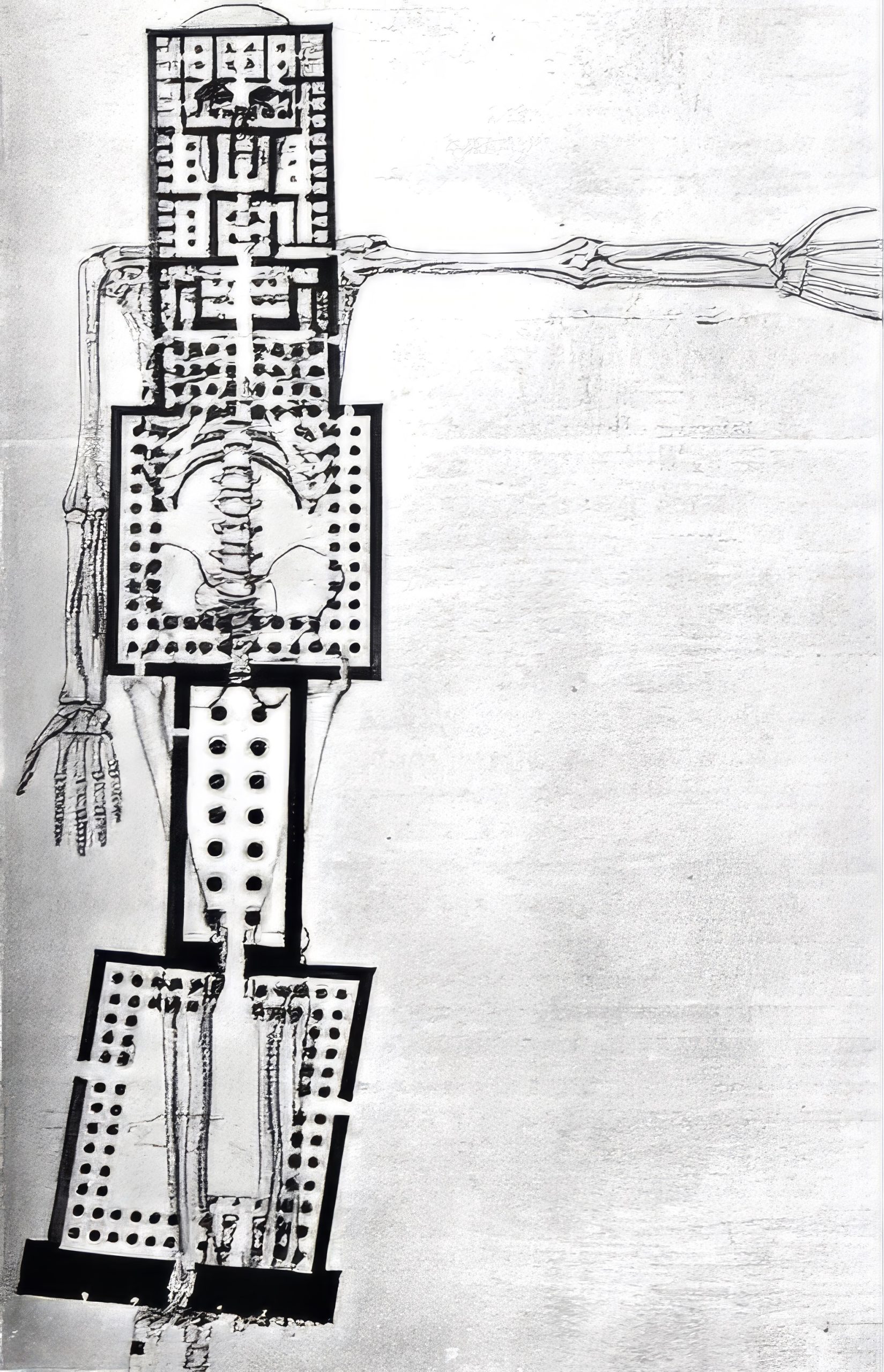
As you can see, there is something quite strange about the way this temple has been constructed: it is crooked. Schwaller decided the Egyptians had a reason for building it this way, in fact he suspected that there was a particular message encoded in this unusual temple.
There is an old saying, “He (or she) who seeks shall find.” So what did Schwaller de Lubicz find from all this measuring? He found Phi. Phi (pronounced to rhyme with “eye”) is a number, but not just any number – it is the number of creation.
If you are anything like me, you may recall your first introduction to the mysteries of circles, where the teacher drew a circle on the board, showed the radius (r) and the circumference (c) and proudly proclaimed, as if you were being initiated into a profound secret that
c = 2πr
π or pi (also pronounced to rhyme with “eye”) turned out to be a very special number. It was equal to 3.14159… with the three dots indicating that you could go on forever and never find an ending. It was supposed to have been discovered by the ancient Greeks, but modern research has shown that much earlier civilisations (like the Egyptians and Babylonians) knew about pi well before the Greeks. If we are going to deal with circles, or circular shapes, then we need pi. This means that if you want to travel into space and orbit the earth, you are going to have to make use of this particular set of digits.
Phi also has a Greek symbol,φ. Like pi, phi is a number: 1.61803… The three dots mean there is no end to the stream of decimals. Ever. The Greeks by the way had a profound hatred for such numbers. They thought they were irrational, and so they christened the whole class of such numbers, ‘the irrationals’.
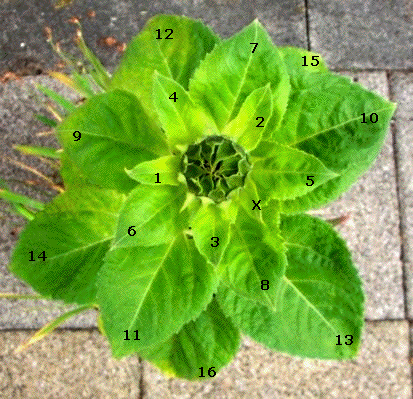
So what is so special about phi? It turns out that phi is found everywhere – in the spiralling of sunflower seeds, in the way leaves grow to catch maximum sunlight, in the breeding of rabbits, in the shells of sea creatures – even in the human body.
Actually the idea of phi is very simple. Take a line:

According to Euclid, writing about 300 BC:
A straight line is said to have been cut in extreme and mean ratio when, as the whole line is to the greater segment, so is the greater to the lesser.
We would say simply that if the ratio of the length of AC to that of CB is the same as the ratio of AB to AC, then the line has been cut in “extreme and mean ratio”, or in today’s language, a ‘Golden Ratio.’ This Golden Ratio when we calculate it, comes to 1.618… In other words, phi.
There is more – much more! If we extend the line divided into a golden ratio (phi) into a rectangle, we get – a Golden Rectangle. The ratio of the short side to the long side is 1:1.618 - of course, that’s what makes it “golden”.
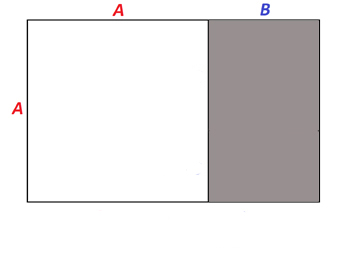
What do you think of this rectangle? Do you think it is particularly beautiful? Let’s put it amongst a few other rectangles:

I bet you can pick out the Golden Rectangle almost immediately. There is just something about the proportions of the golden ratio which appeals to our sense of beauty.
For some years I used to teach classes in mathematics. Each year I would present the whole class with a sheet covered with rectangles, and ask them to select the one they thought was most beautiful. Almost all the students chose the golden rectangle.
But, as the ad says, there’s more. If we keep creating golden rectangles by subdividing the original one, we create a spiral:
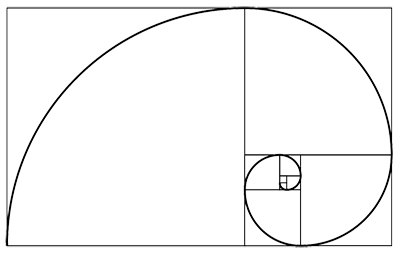
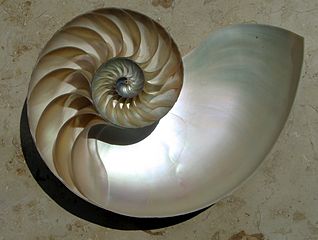
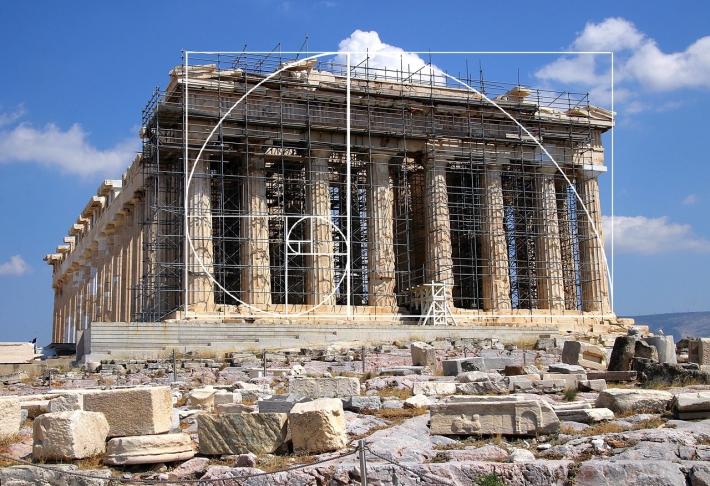
Golden spirals (and golden rectangles) are found everywhere. Artists and architects love them - and so does the natural world.
The Golden Ratio in Nature

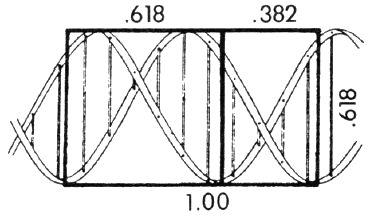
The Golden Ratio in Architecture
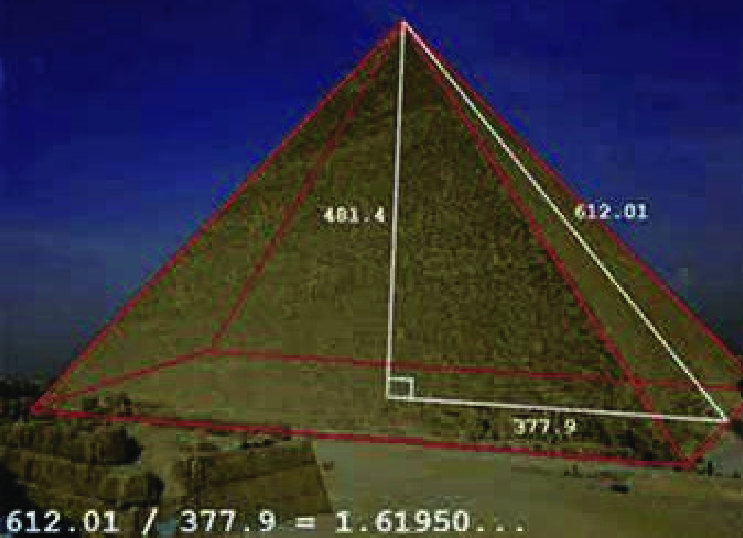
The Great Pyramid
“…taking the slant height and half base length of the great pyramid of Giza, its significance to the golden ratio can be calculated (Fig. 4). Dividing slant height s by half base gives, 186.369 ÷ 115.182 = 1.61804. Then, adding both the slant height and half base and dividing by the largest number (which, in this case, is the slant height) gives, (186.369 + 115.182)/186.369 = 1.61803; which differs from the golden ratio ɸ (1.618033) by only one unit in the fifth decimal …”
SUSTAINABLE CITY GEOMETRIES: SACRED GEOMETRY OF RITUAL SPACE, ARCHITECTURE AND CITY LANDSCAPE IN KANDY, SRI LANKA,
WASANA DE SILVA & NISAL AMARAKOON, www.witpress.com, ISSN 1743-3541 (on-line) WIT Transactions on Ecology and the Environment, Vol 249, © 2020 WIT Press
The Golden Ratio in the Human Body
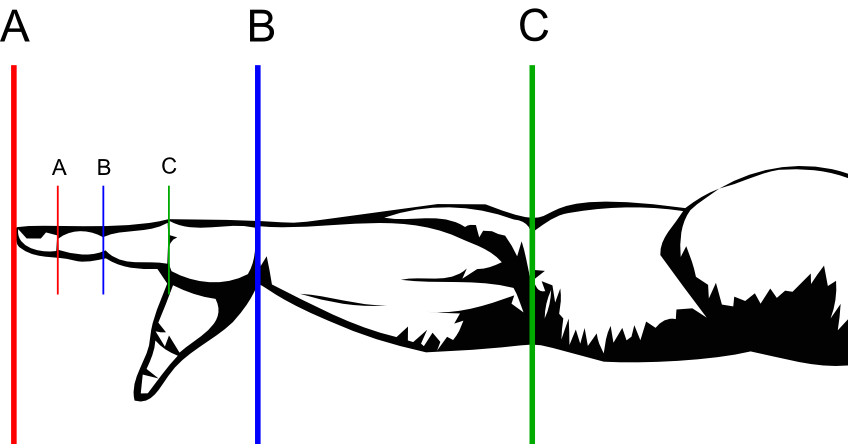
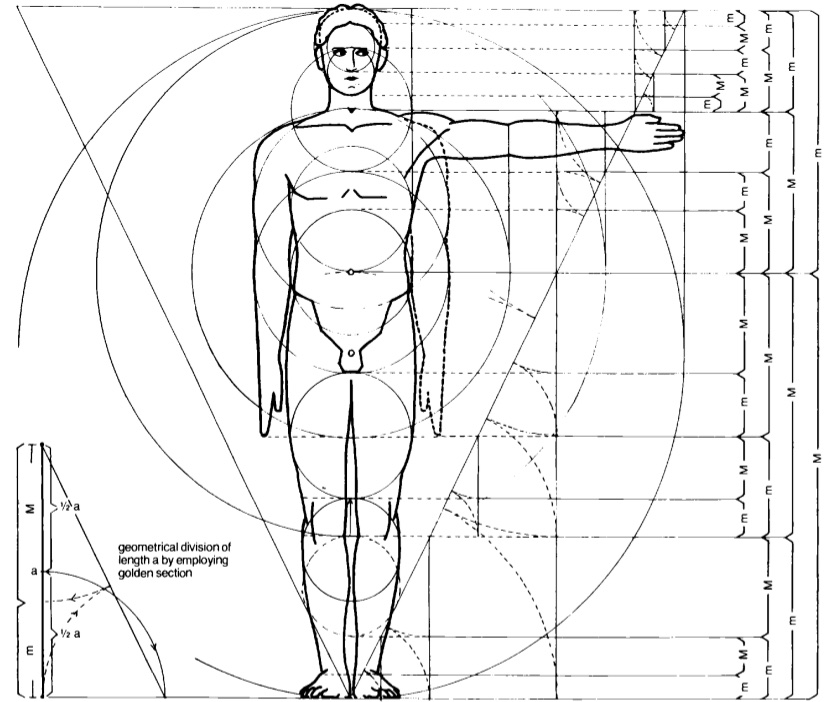
This digram shows so many golden ratios that it looks quite confusing! The most basic ratio however is that between the total height of the figure and the distance between the top of the head and the navel - of course, a golden ratio.
Schwaller & the Golden Ratio
From averages established from measurements of the human body, it has been proved that the navel divides the total height of the body in the proportion of phi to 1. This formula is applied to classical Greek sculpture, and in Egypt as well, except that here the crown of the head is excluded.
Schwaller de Lubicz, The Temple in Man, p. 39
Schwaller made thousands of precise measurements. This is just one of them:
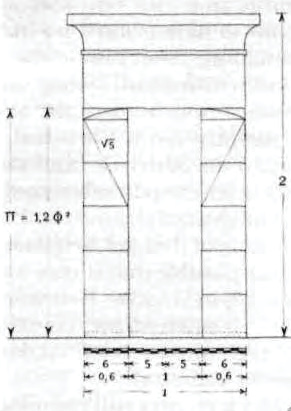
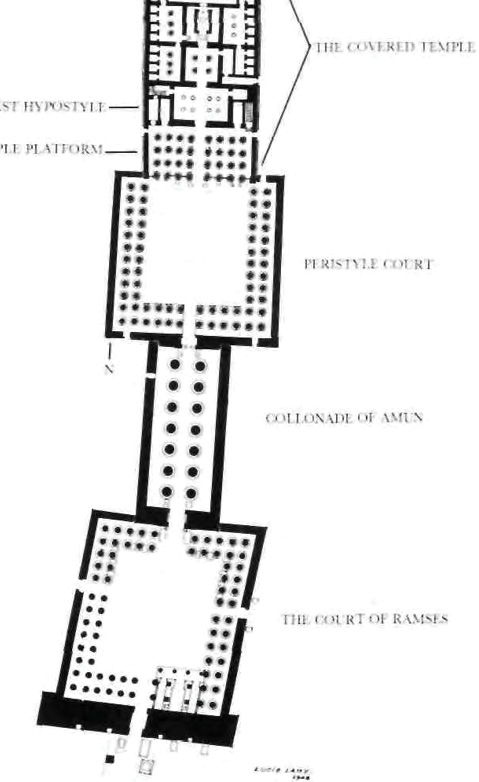
I'm sure you have spotted the symbol for Phi. De Lubciz had discovered through this exhaustive research that the temples of the Egyptians were based upon the number of life. This would have deep spiritual significance. He summed up his discoveries in one striking diagram. Remember how strange and irregular the Temple of Luxor plan was? This why:
Next time: How a number represents a consciousness - a very different consciousness to modern Western thinking...
Absolutely brilliant and beautiful work. Very mathematical too lol. I sometimes think of the dandelion too. Thank you for this JR. You are a magnificent teacher ❤️
Thank you Melody ❤️
I’m sure that someone will one day discover golden spirals in the dandelion – there is beauty everywhere ?
Thank you so much, JR, for this breadth and depth of information on Phi – I’ve printed it out to read thoroughly and try to get more of an understanding.
So interesting to read all the information about R.A Schwaller de Lubicz – I’ve got two books by his wife Isha Schwaller de Lubicz, who was also his student, called “Her-bak ‘Chick-Pea’ – The Living Face of Ancient Egypt” and “Her-Bak Egyptian Initiate” – both describing a young boy’s education and training, first in the Outer Temple, then later on, the teachings given to him as a disciple of the Inner Temple.
Thank you Sheila
Egypt was first a passion of Isha, her husband was not interested at all. Then she persuaded him to visit Alexandria – and the rest, as they say, turned into history.
?
Absolutely fascinating, as usual John. Thankyou so very much. Coupling this with my recent stumblings into the thoughts of Marcel Vogel and the (apparently) well known work he did with crystals cut specifically in accordance with the dimensions of the Giza pyramid (phi figuring loud and strong), and his work as a research scientist at IBM – al this find intriguing and well worthy of further investigation. Thankyou JR for opening a new perspective on the pyramids … cant wait now for the next installment!!!
…and thank you for Marcel Vogel! New to me, but will investigate further ❤️