
Egypt: The First European Esoteric Understandings
The Egyptian civilisation was rediscovered by the West when Napoleon and his troops invaded Egypt at the end of the 18th century. This land of extraordinary monuments and mysterious writing captivated the attention of Europe. When accurate measurements of the Great Pyramid were made, scholars were shocked to discover that the builders had embodied a wealth of mathematical and astronomical knowledge into the structure. Some of the discoveries of the last two hundred years are
**Cardinal Alignments**: The Great Pyramid is oriented almost perfectly to the cardinal points—north, south, east, and west. The precision of this alignment, with an error margin of just a fraction of a degree, suggests a sophisticated understanding of Earth's geography and the ability to accurately determine true north.
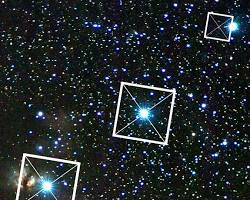
**Orion's Belt**: One of the most compelling astronomical features of the Great Pyramid is its alignment with the constellation Orion. The three pyramids of Giza are positioned to mirror the stars in Orion's Belt, with the Great Pyramid corresponding to the central star, Alnilam. This alignment indicates a symbolic connection to the god Osiris, associated with Orion, and underscores the importance of celestial events in Egyptian cosmology.
**The Golden Ratio**: The Great Pyramid is believed to embody the Golden Ratio, a mathematical constant approximately equal to 1.618. This ratio is often found in nature and art, representing aesthetic harmony and balance. The ratio of the pyramid's height to the length of its base approximates the Golden Ratio, suggesting that the builders intentionally incorporated this principle into their design.
**Pi (π) in the Pyramid**: The relationship between the perimeter of the base of the Great Pyramid and its height is believed to approximate the value of pi (π). If the perimeter of the base is divided by twice the height, the resulting value is close to 3.14, the approximate value of pi. This remarkable correlation indicates an advanced understanding of mathematical constants and their applications.
There are also remarkable engineering achievements. The stones of the pyramids are cut with such precision that you cannot even get the point of a knife between them. The transportation of large, heavy stones – some from a quarry 500 miles away shows the Egyptians were wonderful organisers as well as ingenious engineers.
There has always been a huge split of Western opinion about these ancient achievements. On the one hand, conventional Egyptologists have continually referred to the Egyptians as primitive, a culture obsessed with religion and gods, and no mathematical or astronomical understanding to speak of. Others however have been so impressed that they decided there must be a deep significance in the works of Egypt.
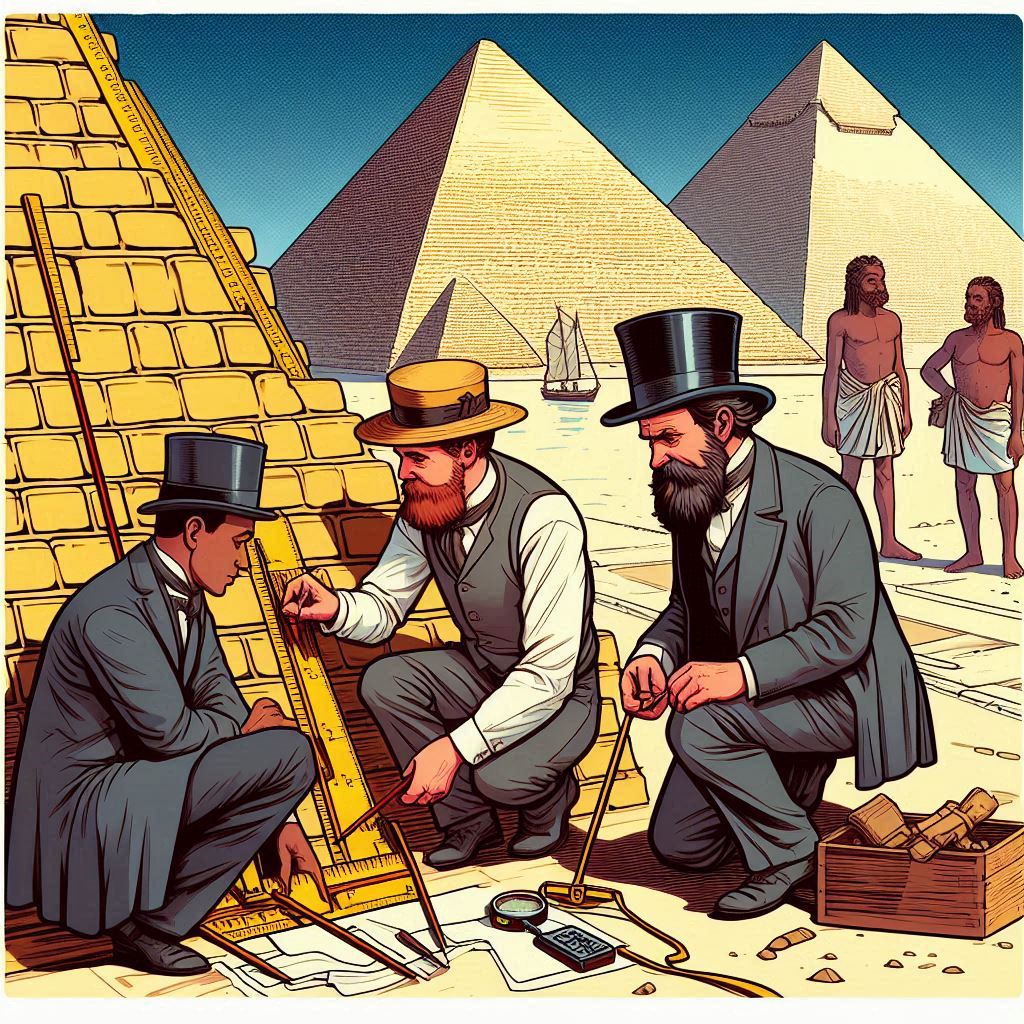
In the nineteenth century an English amateur astronomer, John Taylor, convinced the Astronomer Royal of Scotland, Charles Piazzi Smyth, that there were many significant relationships between the pyramids and the then very modern measurements of the earth. Smyth set out for Egypt and made measurements that were by far the most precise to date. He confirmed the hypothesis that the Egyptians had precise astronomical knowledge and developed a system of weights and measures which could still be found in the old English measures of bushels, gallons, acres and other measures.
John Taylor and Piazzi Smyth were both religious fundamentalists who refused to credit the Egyptian culture with advanced knowledge. They decided that their achievements were the results of divine intervention. Following in their footsteps, another religious zealot, Robert Menzies, declared that the passage system of the Great Pyramid was intended as a system of prophecy. Using a measurement he called the ‘pyramid inch’ Menzies set out to show that every significant historical event of the past two thousand years, was illustrated at a particular pyramid inch measurement within the Grand Gallery. This worked right up to the date of the publication of Menzies’ book. Unfortunately every date after that – in other words every prediction Menzies made – failed to materialise.
At least one person was impressed though. Charles Taze Russell, an America preacher became a convert and founded the Jehovah’s Witnesses on the basis of the pyramid prophecies. He predicted the end of the world in 1914. Alas, when the world continued on, thousands of Jehovah’s Witnesses left the church in disillusion. Russell explained that the world had actually ended, and that Christ had returned but invisibly… But not many people bought into this myth.
These early attempts at esoteric understanding may not be very impressive, but they did highlight that there was more to ancient Egypt than very large tombs.
At the very end of the nineteenth century the occultist, Rudolf Steiner made an observation that is well worth reflecting on.
Steiner divided history into seven periods. These were named:
- Indian
- Persian
- Egyptian
- Graeco-Roman
- Fifth period
- Sixth period
- Seventh period
We are currently in the Fifth evolutionary period. Now in this series of seven periods, the central period, the fourth is unique and will not be repeated. However, the next three periods are reflections of the first three. This means that.
The Seventh period is a reflection of the Indian period.
The Sixth period is a reflection of the Persian period.
The Fifth period is a reflection of the Egyptian period.
According to Steiner then, our current historical time is repeating the Egyptian period. Perhaps this is why ancient Egypt has become such a fascination for many people at this time.
In our next blog we shall reflect on the implications of Steiner’s theory, and perhaps discover some insight into our present achievements and challenges.
...next time: the real esoteric investigation